It's Sunday night here and I just got back this afternoon from our weekend trip to
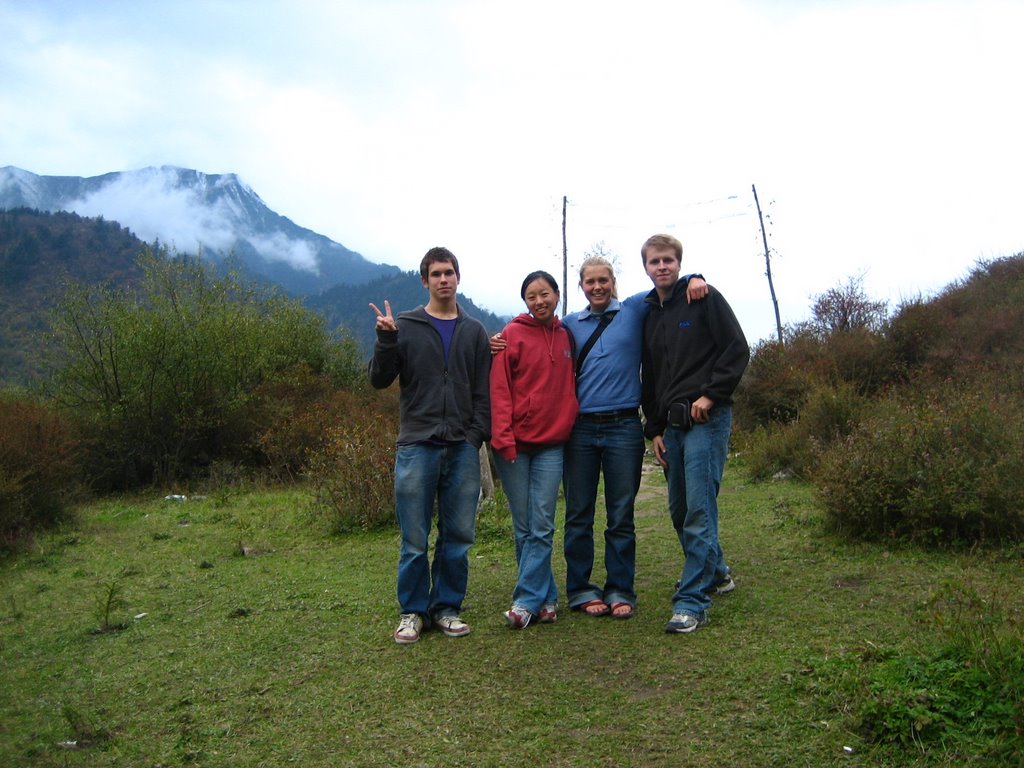
WenChuan. In a word, it was amazing. Laura didn't come along because she had sign language class on Saturday, but Li Juan did so Li Juan and I caught a taxi to campus at 7:45am on Saturday morning. At this point in time I still had no idea where we were going (Wen something was all I had heard), all I knew was that we would be staying over night. At 8am Ben, Matt, Deborah, Tabitha, Pang
Laoshi (our exchange program coordinator) and her daughter, Li Juan, two of Li Juan's students named Eddie and Michelle, and I got in the van and started off West. Eddie and Michelle are obviously not
their real names, but Chinese names are very hard to remember and they asked us to call them by
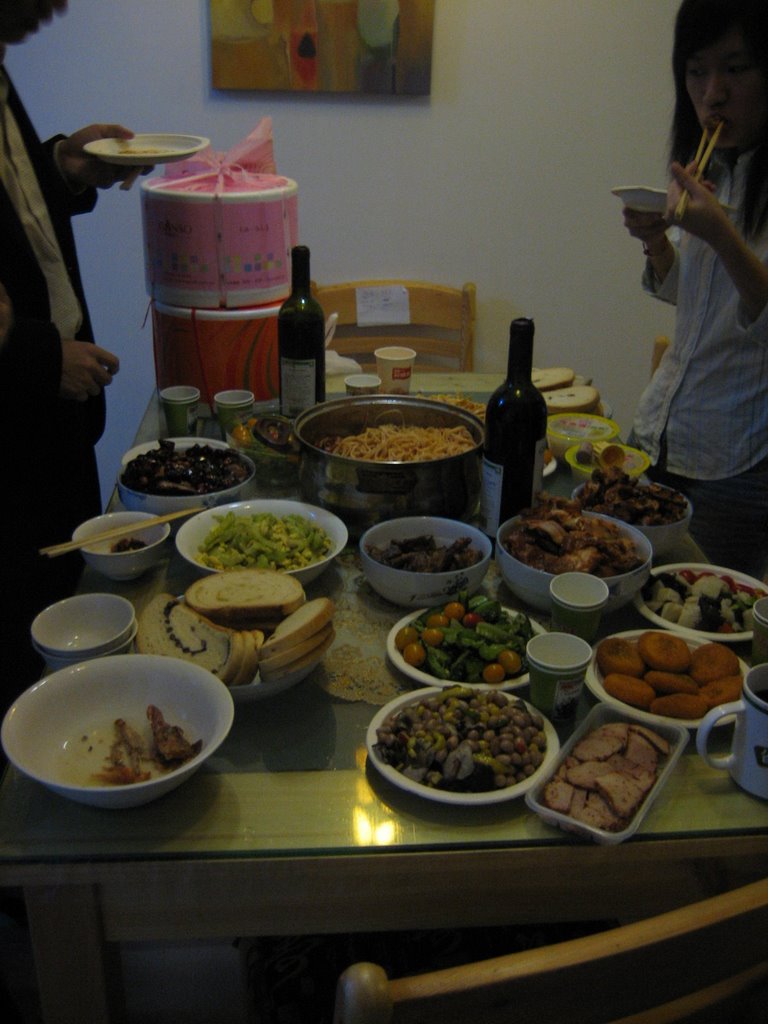
their English names. Along the way we stopped for lunch (Chinese trips always keep you very well fed) and arrived at
WenChuan at about 3:30pm.
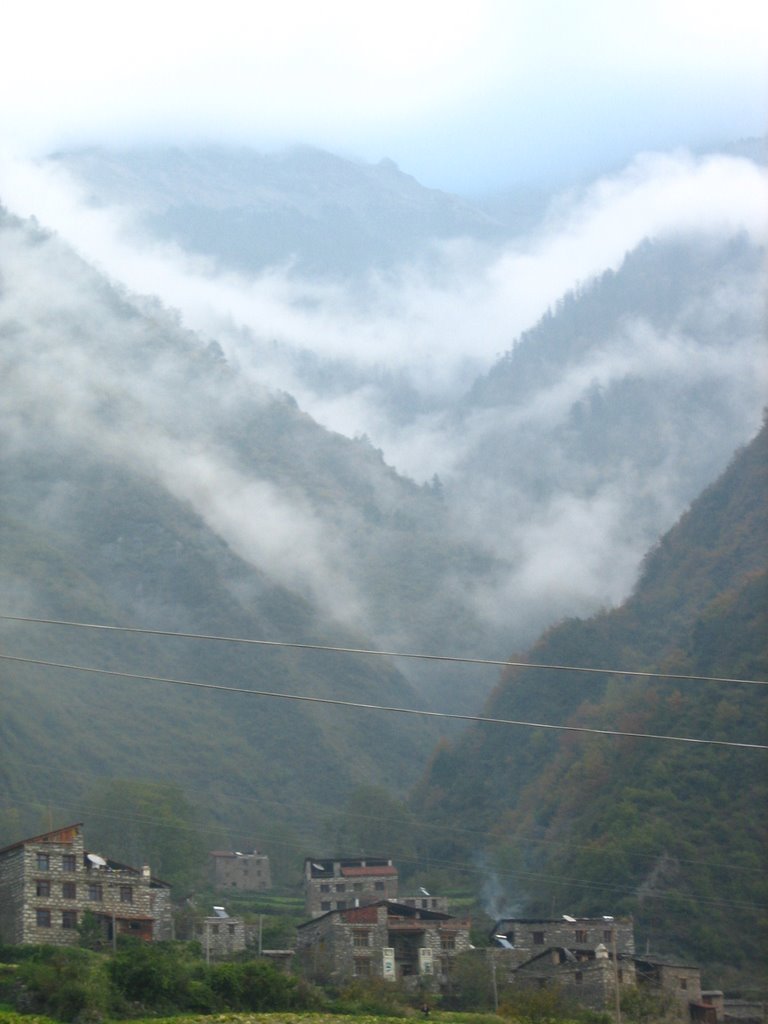
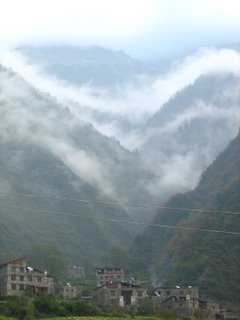
WenChuan is a small Tibetan village of about 180 people set in the
mountains of Western
Sichuan at about 2500 ft. It felt like fall there, which I loved.

They had beautiful wood-working and paint on all the doors and windows. The air was clear and crisp, a sharp distinction from the air in Chengdu and the trees on the
mountains were all turning. There was snow on the very tops of some of the
mountains. The scenery was
absolutely beautiful. The houses there were 2 story affairs built of 6" x 12" x 8" granite blocks fit together with smaller rocks. Each house was surrounded by
fields of cabbage, which is the main basis of income for this community besides tourism. Surprisingly, all of the cabbage seemed to be left in the fields this year. We asked the guy who owned the house we stayed in why they had left the cabbage to rot in the fields. He said that this cabbage was only selling for 2
kuai per
jin (a
jin is a common unit of measure equal to about half a kilo) this year because the weather had been bad so the cabbage was not good enough to warrent digging up and transporting to town to sell, they would not have made a profit on it. This year they only made 100
kuai on cabbage and were relying on tourism to make ends meet. Even though tourism was a large part of
their income, the town was far from a touristy. It seemed as though nothing had changed to
accommodate the
tourists, it was as if we weren't even there. Many of the Chinese tourists that come have a guide that escorts them the 2 miles up the
mountain to an old battlefield where they will camp for the night and head down in the morning. Many being a
relative term, as this place is still not a well-known or popular destination for Chinese people because of the rustic
accommodations. This battle field is a flat, grassy spot with run-down stone buildings standing around. The battle
occurred between two ethnic minority groups, the Z
ang (
Tibetan) and the
Qiang (very similar to
Tibetan, but not), very long ago. The two groups, though
seemingly very similar, are still very divided and will not inter-marry. We did not get to hike all the way up the
mountain or camp on the grassy battle field because we arrived too late in the day.
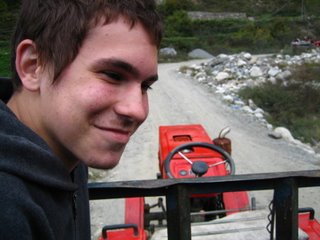
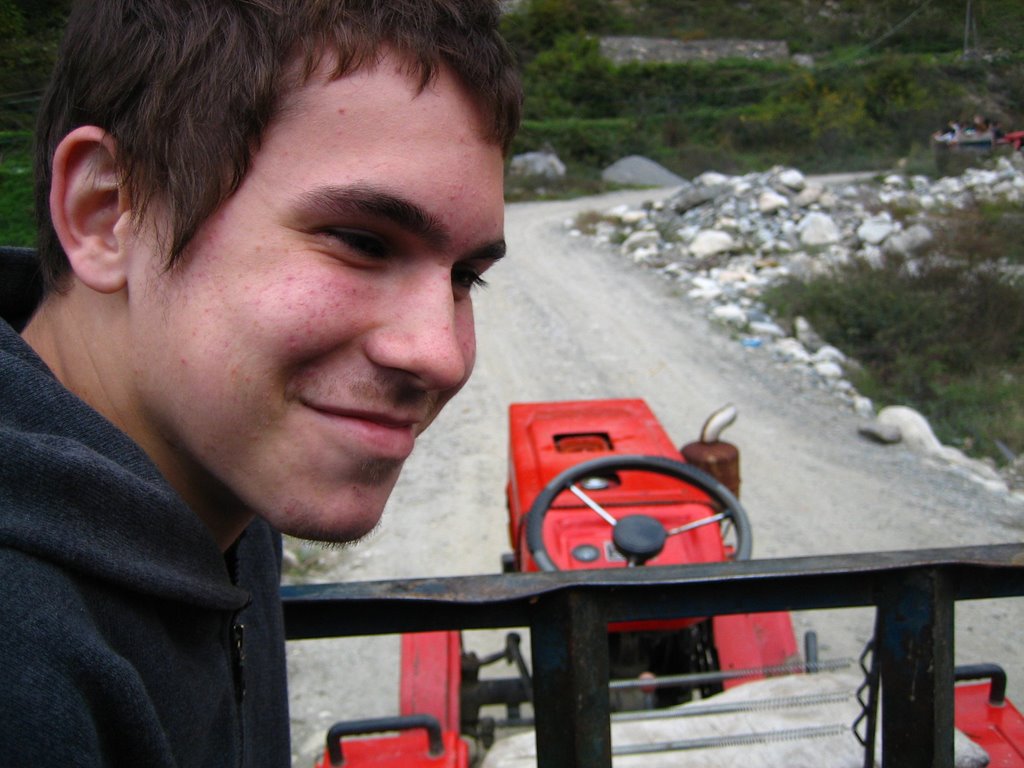
Instead, our van driver drove us as far as he could, then we hired someone from the village to drive us up the curvy, rutted-out
mountain roads in a little cart behind his little red tractor. The tractor ride was very
smushed and a little scary, but quite an experience. We had to walk another mile or so to get to the
battlefield.


On the way we crossed a rickety old bridge across a ravine. Only 2 people were allowed on the bridge at one time and I tried not to think too hard about why. You can see the prayer flags on both sides of the "railings", which decorated everything in the village. We continued on for another few hundred meters and reached a waterfall with a little pool on the side. It was cold and I didn't have my swimming suit, but it was the perfect swimming hole. Then we had to hurry back so we could get back before dark. The tractor ride down the hill was even more fun than on the way up. It was like a tilt-a-whirl or
roller coaster gone terribly, terribly wrong. It was thrilling to say the least and I couldn't stop smiling all the way down. We met our van again and it was dark by the time we got back to the village where we would spend the night. We sat around a small charcoal fire to keep warm while they made dinner for us. I felt bad because Pang
Laoshi and Li Juan were v
ery demanding and
condescending when asking things of our hosts, but there was really nothing I could do. Deborah, Matt, Ben and I all felt the same and we just tried to be as nice and thankful as we could without offending Pang
Laoshi or
Li Juan. I think part of it is a sort of racism that the Han people have against minority groups and part of it is just the way Chinese people treat all service people (like
restaurant workers, etc). For example, they were eating dinner when
we came in and they made them stop eating dinner to make us dinner. She also made them go down to the store to buy us chickens for dinner. The hardest thing for me was not that our hosts gave us so much, which also
should have happened in
Yangjuan, it was that it was expected or demanded of them in a very ungrateful way. I think Pang
Laoshi was especially harsh because it was not as nice as she had expected and she felt embarrassed and kept
apologizing to us. We just kept trying to reassure her that this is exactly what we wanted and we loved it. After dinner we walked up the hill to the house we would spend the night in. The 5 of us wanted to stay together, but they made us split up into one big room of all 6 girls and one room with all 4 boys. It was cold that night in our big, unheated, stone room and I slept very well. In the morning
Deborah and I got up and walked around while we watched the sun peek up behind the
mountains and the fog. At 8am we drove back up the
mountain to a different place where there was a Tibetan temple. This temple also had a
Dalai Lama, but he was not there at the time.
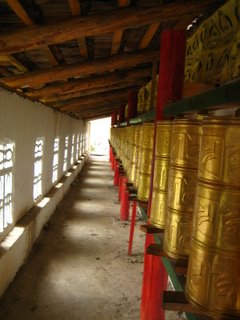
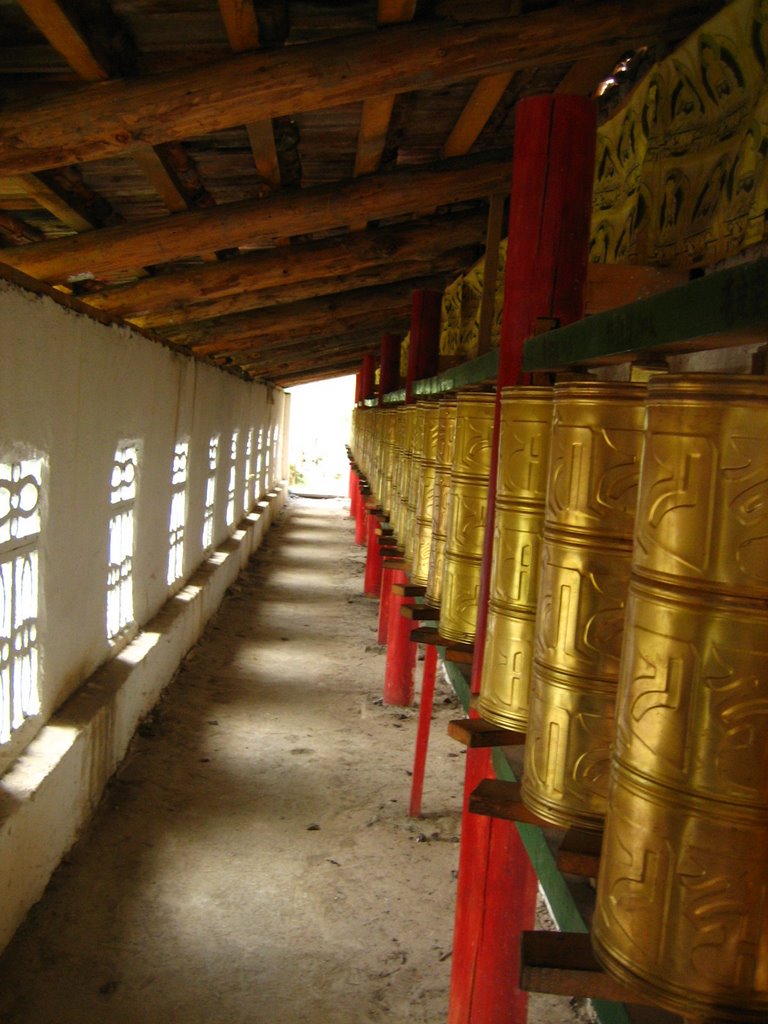
The temple consisted of two smaller, skinny buildings full of a row of gold prayer wheels and the main temple, as well as some other abandoned looking
buildings around the compound. The main temple was
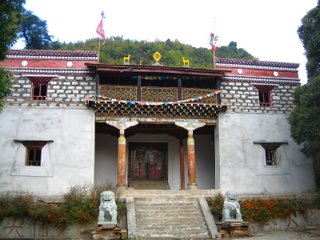
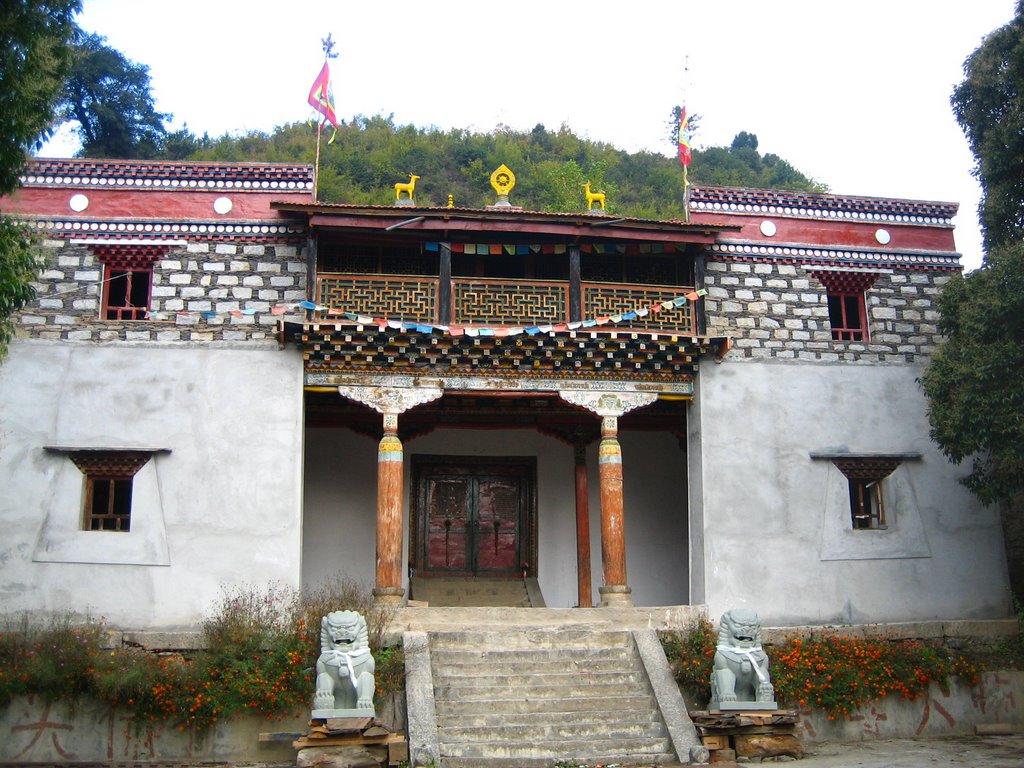
beautifully decorated in the classic Tibetan style, like the other houses. It had two lion statues out front with white scarves tied around
their necks. We also all wore the white prayer scares around our necks. When you put them on
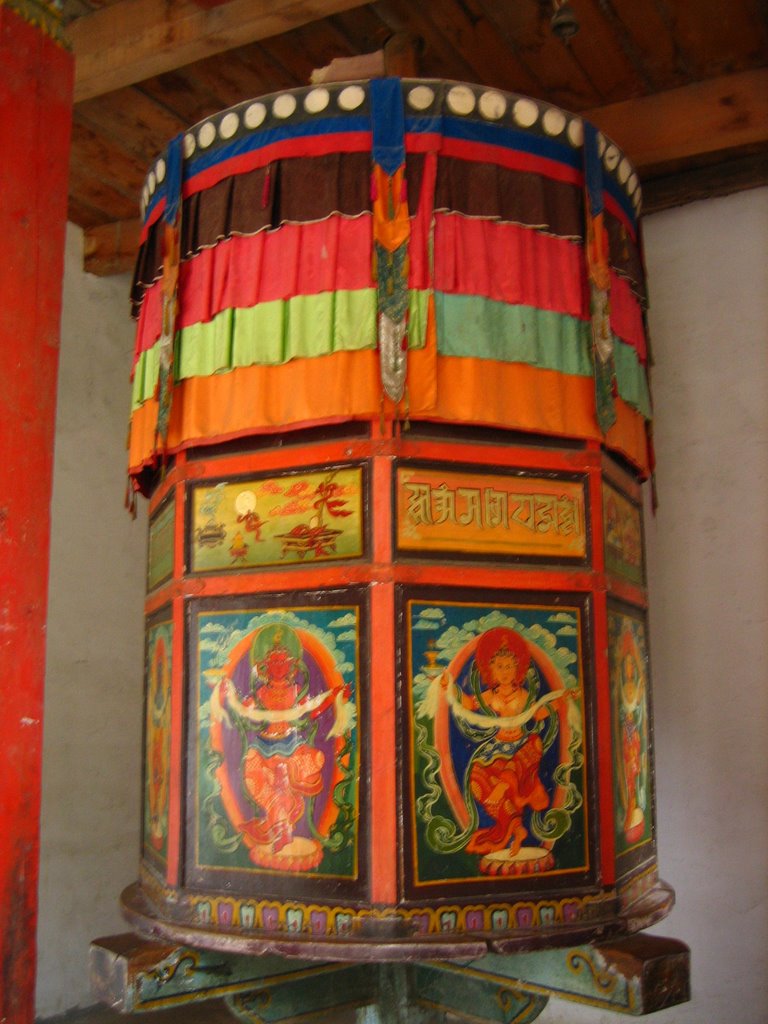
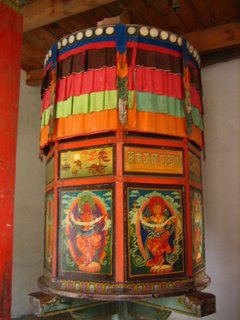
each other you say a prayer that means "good will to you" sort of. Inside the front portico of the building, on either side, were two huge prayer wheels. There was an old woman turning one of them when we got there and chanting a prayer. She said it would be fine if we turned them to, so we got to try it. There was a stick sticking out of the top that would ring a bell hanging from the ceiling each time the wheel made a full revolution. The woman said she comes here three times a day to pray. We didn't get to go inside the temple because it was locked because the Lama wasn't there. After about a half an hour, in classic Chinese tourism style, we returned to the van and drove down the
mountain to get breakfast. By the time we reached the town it was about 11 and we ate noodles and
baozi for more of a brunch. Those who know me well will be proud to know that the noodles had pickled mustard greens in them and I still ate it. It was not my favorite, but mustard greens don't really taste like mustard here and the
Sichuan pickling style (which is famous) is much better than pickling in the US, so it is tolerable. By the time I get back, there's not going to be anything I don't like. The drive back was long, but I slept
alot. Now I am back and trying to get my homework done that I did not do all weekend. Happy Fall!
 I just got back from my Chinese Politics class and it was a really interesting lecture today. We were talking about the May 4th Movement and then our teacher showed us some pictures from the Cultural Revolution and talked about how people view Communism and that time period today. For those of you unfamiliar with Chinese history (don't feel bad, I didn't know anything until I came here), the May 4th Movement occurred in 1919 and is when the first Tiananmen Square protest happened in response to the treaty of Versailles, which conceded to the Japanese. Many people regard the May 4th Movement as the start of modern Chinese politics for two reasons. One, it was the beginning of the mass political movement and the first time China really broke away from the feudal system. Second, the Communist Party views this as its birth, therefore so does present day China. It is unusual that they would pick this day because it is still years before the Chinese Communist Party (CCP) would win the civil war over the Guomingdang (Nationalists) and officially take power. However, the CCP likes to view anything remotely revolutionary as Communist, so there you have it. It is still amazing to me what this country and these people have been through, an
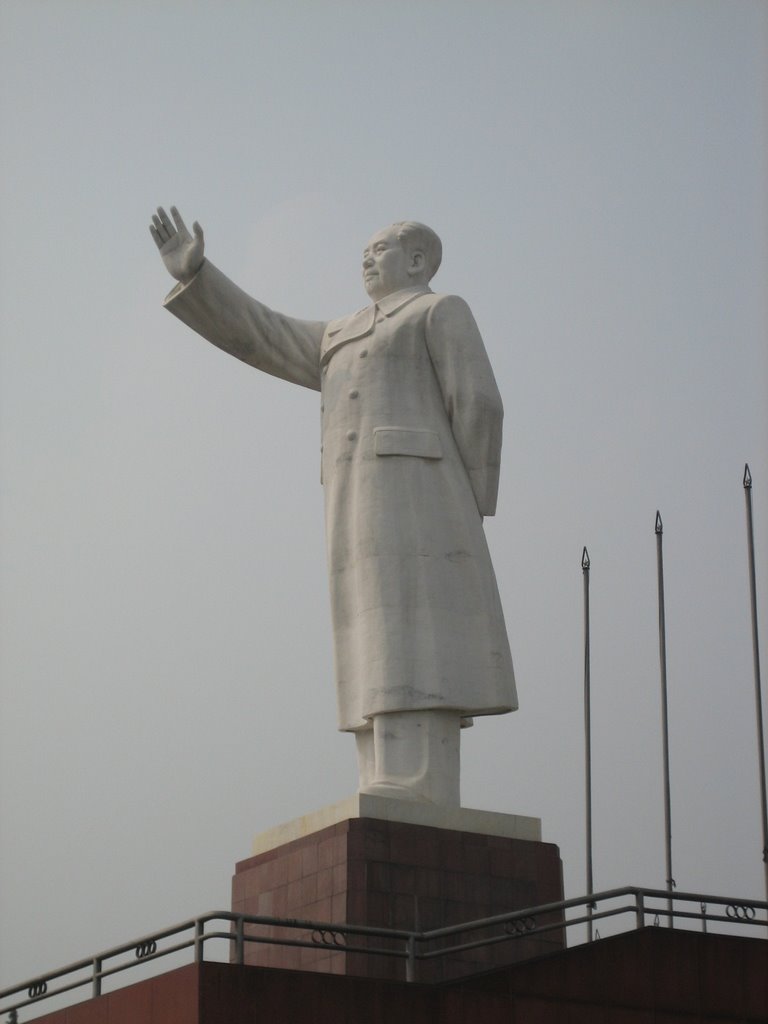 d so recently. Our teacher told us stories today about how his father had to undergo humiliating and brutal denouncement meetings, like many "counter-revolutionaries" did during the Cultural Revolution and his own 14 year old daughter was there as part of the Red Guards to criticize him. He says his family sometimes laughs about that time now, like it's a family joke. His father says his family is lucky because no one died. He also said that some of his older colleagues at the college remember when there was violence on this campus. They told him how one day one of their friends did not run away fast enough and instead of shooting him they buried him alive right here on this campus. There are those kinds of stories, but we also talked about some of the good things during that time. It was interesting because China definitely still has flaws now and in many ways they are exactly the opposite as the ones they had before. Our teacher showed us pictures and talked about the solidarity and excitement people felt at starting a new government that had the possibility of making their lives better. Now people are just apathetic. He talked about the sense of community people had, especially in the beginning before the Red Guard phase. Now people, on large part, have broken Confusion ties to their family and communities are too big to create any real sense of belonging. People seem ready to walk all over anybody if it will make them an extra dollar. For example, people don't que in China. If you are waiting for the bus and it comes, you try to cram your way on as quickly as possible, there is never any line. It is completely acceptable too and if you try to wait your turn, it will never come because people will just keep coming and cutting in front of you. It took me alot of waiting around to figure this out, but it really is each man for himself. There was also still a very strong work ethic. People had pride in what they did and were very careful and diligent in their work. This is why so many old, historical relics remain, because of the quality of craftsmanship. Now China is well known for pirated DVD's and knock-off purses and watches. It's again, all about money. Even in school, people always ask me why I decided to major in Chemical Engineering and I answer, because I like it.
  That is always a weird answer for them because pretty much everyone chooses the path, or major, that will make them the most money the fastest with little or no regard for the actual discipline. Some people even want to go back to the pre-cultural revolution days, when Communism was still young and in a way I understand that. I'm just starting to understand the history, culture, and politics of this crazy, huge country and all the previous statements are, of course, huge generalizations, but I just thought it was interesting. There is also tons more to say, but that is all I can think of how to verbalize right now. The times they are a changin'... ... but in China I'm not really sure to where. This last picture is from the post office, to illustrate that the Communist Party is definitely still alive and kicking.